
When Urchin Removal Works and When it Doesn’t
TLDR
Sea urchin removal can help kelp forests recover but only in the right conditions. It works best where kelp still exists and environmental stress is low. In long-term urchin barrens, removal alone often isn’t enough without active restoration. Success depends on timing, site conditions, and a broader strategy, it’s a tool, not a cure-all.
When Urchin removal works and when it doesn't?
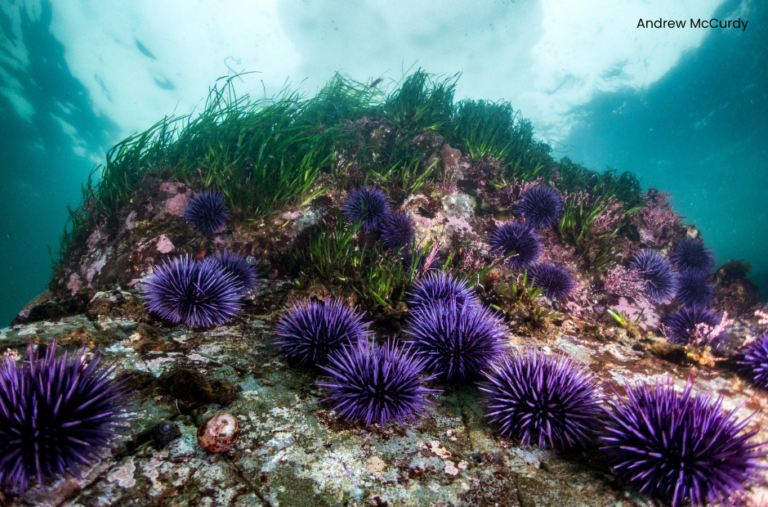
Sea urchins are often at the center of kelp decline narratives. In many temperate coastal systems, high urchin densities can maintain “barren” states where kelp recruitment fails and reef structure shifts dramatically.
As a result, urchin removal has become a visible and sometimes urgent intervention strategy in kelp restoration. But while grazer management can be powerful, it is not universally effective. Whether removal works depends on ecological context, site condition, and what happens next.
Urchin removal is often discussed in the context of fisheries management and ecosystem recovery. As we explored in our previous article on the role of the urchin fishery in kelp restoration, grazer dynamics sit at the intersection of ecology and economics. Understanding those distinctions is critical to designing restoration strategies that are both realistic and durable.
When Urchin Removal Works
Urchin removal is most effective in systems that retain the underlying capacity to support kelp recovery.
In these cases:
- Kelp propagules are still present in nearby areas
- Environmental conditions remain suitable for growth
- Substrate is intact and stable
- Urchin densities are above ecological thresholds but not structurally irreversible
When grazing pressure is reduced under these conditions, kelp recruitment can rebound quickly. Juvenile kelp establish, canopy structure returns, and habitat complexity increases.
In such systems, urchin removal acts as a release mechanism, lifting a biological constraint that was suppressing recovery. However, this outcome depends on whether the ecosystem has crossed a tipping point.
Ecological Thresholds and Tipping Points
Kelp forests and urchin barrens can represent alternative stable states. Once a system shifts into a barren state, simply reducing grazers does not automatically restore kelp.
Key questions include:
- Has kelp been absent long enough that propagule supply is limited?
- Have temperature regimes shifted beyond optimal growth conditions?
- Has substrate been altered by bio erosion or sedimentation?
- Are predator populations still suppressed?
If the broader ecological context no longer supports kelp recruitment, grazer removal alone may not reverse the system. In these cases, removal must be paired with additional interventions.
When Urchin Removal Doesn’t Work
There are several scenarios where urchin removal produces limited or temporary outcomes.
Environmental Conditions Are No Longer Suitable
If warming trends, nutrient shifts, or chronic stressors persist, kelp may fail to recruit even when grazing pressure is reduced. Removal in these cases reduces urchin density but does not address the underlying environmental constraint.
Propagule Supply Is Insufficient
If surrounding kelp populations are too sparse or distant, there may not be enough spores to naturally recolonize cleared areas. Without nearby source populations, active restoration such as outplanting juveniles may be required to reintroduce kelp.
Structural Habitat Has Degraded
In long-term barrens, reef structure can change. Bio-erosion, sedimentation, or encrusting organisms may alter the substrate in ways that reduce kelp attachment success. Removing urchins in such contexts does not rebuild structural suitability.
Grazing Pressure Quickly Rebounds
Urchin populations can recover rapidly if predator dynamics and recruitment patterns remain unchanged. Short-term removal efforts without follow-up management may result in cyclical suppression rather than lasting recovery.
What Effective Recovery Strategies Require
Urchin removal is most effective when embedded within a broader ecological strategy.
In applied restoration, this often means:
- Assessing site suitability before intervention
- Monitoring environmental conditions alongside grazer density
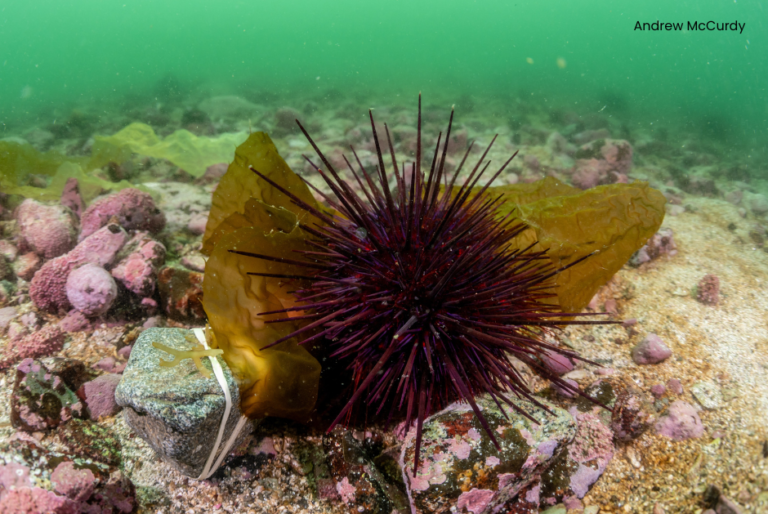
- Pairing removal with active kelp outplanting where propagule supply is limited
- Designing repeatable monitoring protocols to track survival and recruitment
- Engaging with fisheries and management bodies to align ecological and economic incentives
At West Coast Kelp, restoration decisions are informed by these system-level considerations. Removal is treated as one tool among several, not a standalone solution. This approach recognizes that kelp recovery is shaped by interacting variables, not a single driver.
Removal as a Tool, Not a Silver Bullet
Urchin removal can catalyze recovery in the right context. In the wrong context, it can consume resources without achieving durable change. The distinction lies in ecological readiness.
Effective restoration begins with understanding whether a system still has the biological and environmental capacity to support kelp. Where that capacity exists, grazer management can unlock recovery. Where it does not, broader interventions are required.
Framing urchin removal as a universal solution oversimplifies the complexity of coastal ecosystems. Framing it as a strategic intervention within a larger restoration design better reflects ecological reality. In kelp restoration, success depends not only on reducing pressures, but on actively rebuilding the biological foundations that allow kelp to persist.